Can Piled Raft Foundations Be Used on Poor Ground Conditions?
March 17, 2026
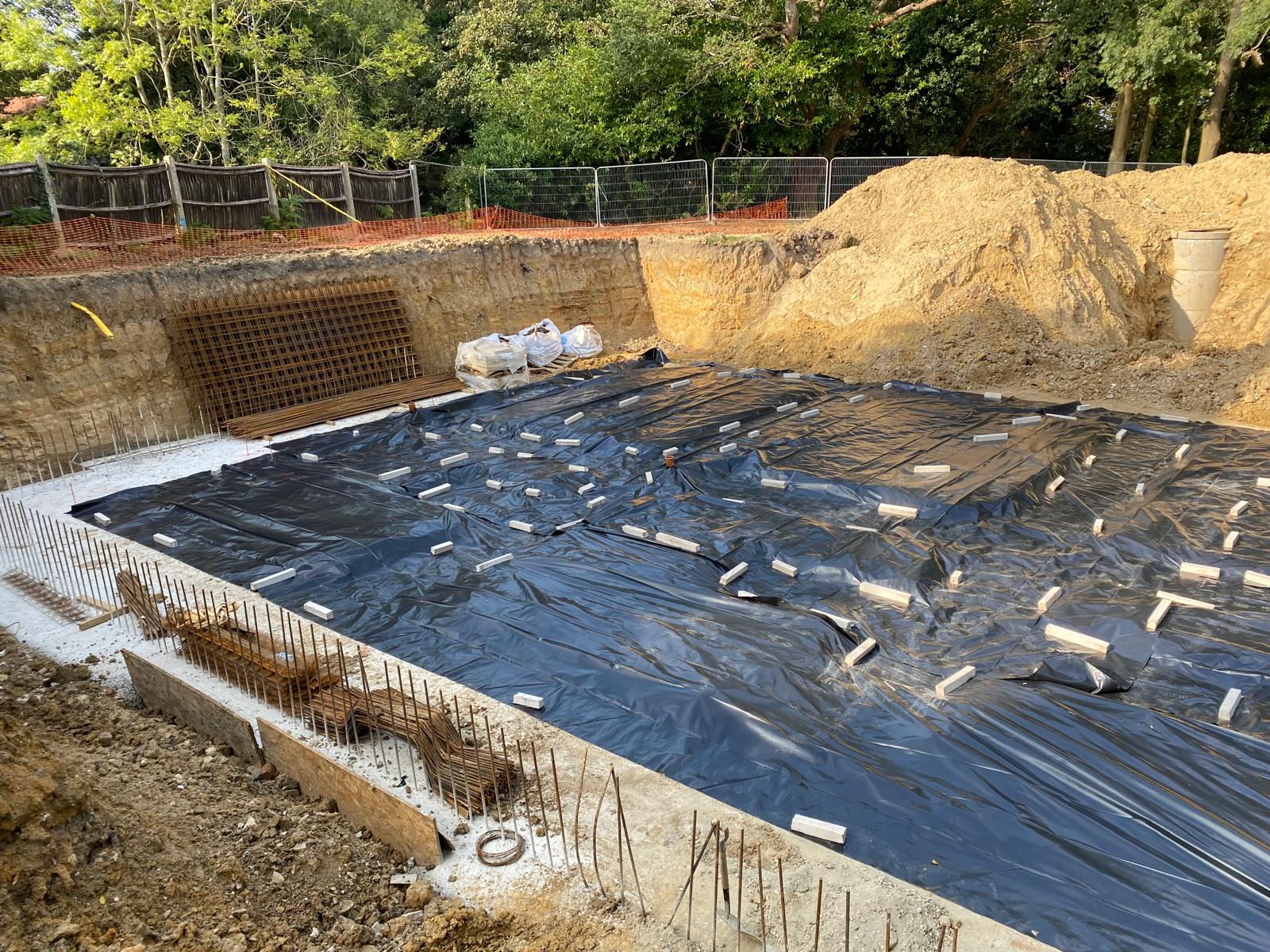
When ground conditions are described as “poor”, it often raises immediate concerns about feasibility, cost and risk. Many clients assume that difficult ground automatically means a fully piled solution is the only safe option.
In reality, that isn’t always the case.
A piled raft foundation can often provide a more balanced, efficient and cost effective solution, even on challenging sites, provided it is designed and assessed properly.
This article explains when piled raft foundations can be used on poor ground, where they work well, and where they may not be suitable.
What Do We Mean by “Poor Ground Conditions”?
The term “poor ground” is often used broadly, but in practice it can refer to several different scenarios, including:
Soft or compressible soils such as clay or silt
Made ground or uncontrolled fill
Variable or layered soil profiles
Low bearing capacity near the surface
Ground prone to settlement or movement
Not all poor ground behaves the same way. The key is understanding how the ground will respond to load over time, rather than simply categorising it as good or bad.
How a Piled Raft Foundation Works in Challenging Ground
A piled raft foundation is designed so that:
The raft spreads the load across the ground, reducing pressure
The piles provide additional support, particularly where needed most
Both elements work together to control settlement, rather than relying solely on piles
On poor ground, this combination can be particularly effective.
Instead of installing a large number of deep piles to bypass weak soils entirely, a piled raft uses fewer, strategically placed piles to improve performance while still making use of the ground’s capacity.
When Piled Raft Foundations Work Well on Poor Ground
From experience, piled raft foundations are often a strong solution in the following situations:
1. Variable Ground Conditions Across the Site
Where ground conditions change across a site, for example areas of made ground overlying clay, a piled raft can adapt to these variations.
The raft distributes loads more evenly, while piles can be positioned to support weaker zones. This reduces the risk of uneven settlement without over designing the entire foundation.
2. Soft to Medium Strength Clays
In many parts of London and the South East, clay soils are common.
While clay can be compressible, it often still provides usable bearing capacity. A piled raft can take advantage of this by allowing the raft to carry part of the load, with piles helping to control long term settlement.
This is often more efficient than relying entirely on deep piling.
3. Sites Where Settlement Control Is the Main Concern
On poor ground, the issue is often not total failure, but how much the building will settle and whether that settlement is uniform.
Piled raft foundations are particularly effective where:
-
Differential settlement needs to be controlled
-
Structural tolerance is limited
-
Long term performance matters
By placing piles beneath key load points, the system can significantly improve settlement behaviour.
4. Projects Where Full Piling Would Be Excessive
In many cases, fully piled designs are driven by conservative assumptions rather than actual need.
A piled raft can often achieve:
-
Reduced pile numbers
-
Shorter pile depths
-
Lower material usage
This is especially valuable on sites where ground conditions are poor but not so poor that they require complete bypass through deep piling.
5. Urban and Constrained Sites
On restricted sites, particularly in London, extensive piling can be difficult due to:
-
Limited access
-
Noise and vibration constraints
-
Proximity to neighbouring structures
Using fewer piles as part of a piled raft system can reduce disruption while still delivering a safe and effective foundation.
When Piled Raft Foundations May Not Be Suitable
While piled raft foundations are highly adaptable, there are situations where they may not be the right solution.
These include:
Extremely weak or highly compressible soils where the raft contributes very little
Very strict settlement limits, such as sensitive structures or specialist facilities
Highly unpredictable ground conditions with insufficient investigation data
Sites requiring deep load transfer to strong strata at significant depth
In these cases, a fully piled solution may still be required.
The Importance of Ground Investigation
The success of a piled raft foundation on poor ground depends heavily on understanding the site conditions properly.
A detailed ground investigation allows the design team to:
-
Assess bearing capacity and settlement characteristics
-
Identify variability across the site
-
Determine how much load the raft can safely carry
-
Optimise pile layout and depth
Without this information, any foundation solution carries unnecessary risk.
A More Balanced Approach to Difficult Ground
One of the biggest misconceptions is that poor ground automatically requires the most conservative solution.
In reality, the most effective foundation design is not the one with the most piles. It is the one that responds intelligently to the ground conditions and structural requirements.
Piled raft foundations offer that balance. They allow engineers to:
-
Use the ground where possible
-
Support it where necessary
-
Control settlement without over designing
Final Thoughts
Yes, piled raft foundations can absolutely be used on poor ground conditions.
In many cases, they provide a more efficient and practical alternative to fully piled foundations, particularly where:
-
Ground conditions are variable
-
Settlement control is key
-
A balanced, cost effective solution is needed
The key is early assessment, proper design and a clear understanding of how the ground and structure will interact over time.
Recent Blogs
- Can Piled Raft Foundations Be Used on Poor Ground Conditions?
- When Is a Piled Raft Foundation the Right Choice for a Building Project?
- How Geotechnical Assessment Helps Control Settlement Issues
- Dealing with Settlement Problems Using Piled Raft Foundations
- The Role of Piled Raft Foundations in Flood-Prone Areas