When Is a Piled Raft Foundation the Right Choice for a Building Project?
January 16, 2026
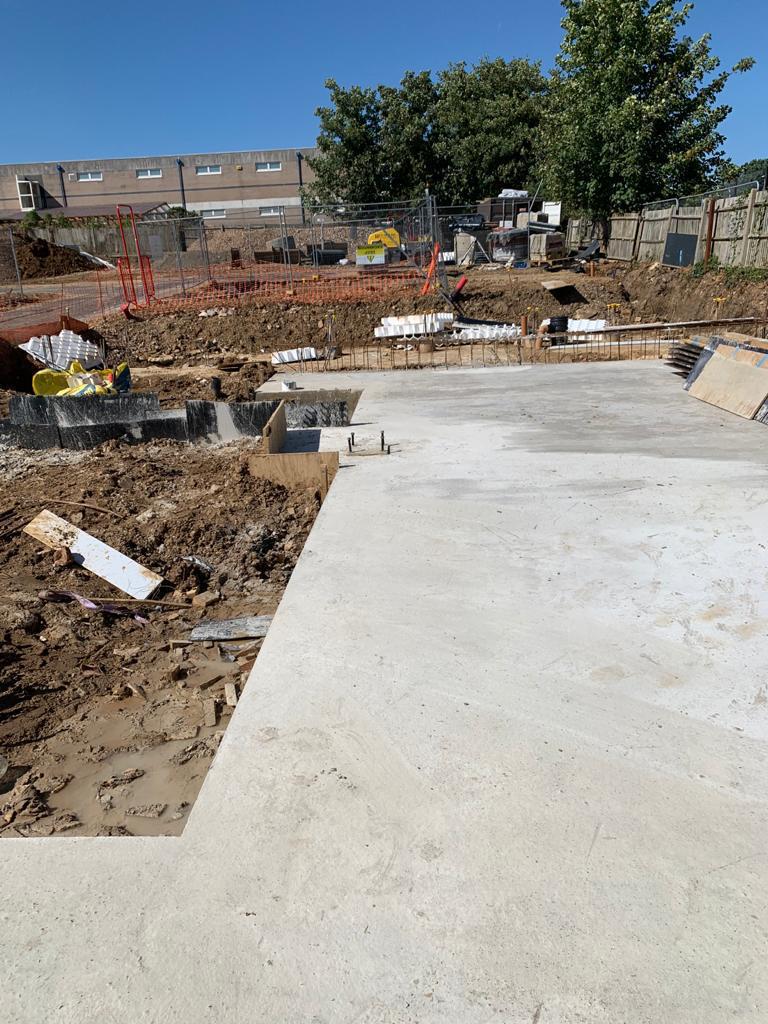
Selecting the appropriate foundation structure is among the most important decisions in any construction project. Structural performance, cost, programme, sustainability and long-term risk are affected by it.
Although sometimes referred to as a “hybrid”, a piled raft foundation (PRF) is much more than that. If conditions are favourable, a piled raft can enhance performance, lower costs, and lead to a more economical use of material as compared to a fully piled.
When is a piled raft foundation the right choice?
This guide explains when and why piled rafts are effective.
What Is a Piled Raft Foundation in Construction?
A raft foundation is a foundation system that transmits the entire building load to the ground.
* A concrete slab that spreads out the load on the ground.
* A diminished count of additional piles helps to add support and regulate settlement.
In a conventional piled foundation, the piles carry almost all the building's load. A piled raft is where both raft and piles share the load.
The aforementioned load-sharing is what makes piled rafts effective in the right ground conditions
When Ground Conditions Are Variable (But Not Hopeless)
Piled raft foundations work well on sites with moderate to poor ground, as long as the ground is not so weak that a raft alone would be unsafe.
Common examples include:
-
Made ground overlying stiff clays
-
Variable clay profiles
-
Sites with layers of fill, sand, and clay
-
Urban plots with inconsistent historical ground conditions
In these cases, a traditional raft might settle too much, while a fully piled solution could be overkill. A piled raft uses piles to control settlement but still lets the raft do its job.
When Settlement Control Is More Important Than Ultimate Capacity
Many buildings do not fail because the ground cannot carry the load. They fail because of uneven settlement.
Piled raft foundations are often the right choice where:
-
Differential settlement is the primary concern.
-
Structural tolerance is tight.
-
Long-term movement must be controlled.
Placing piles under areas with higher loads can reduce differential settlement while still allowing the raft to work efficiently.
This makes piled rafts particularly effective for buildings with:
-
Irregular column grids
-
Mixed-use loading
-
Heavily loaded cores or plant areas
When a Fully Piled Solution Would Be Over-Engineered
A piled raft foundation is efficient.
Traditional piling designs often use conservative assumptions, which can lead to:
-
More piles than necessary
-
Deeper piles than required
-
Higher material and installation costs
A piled raft foundation can allow:
-
Fewer piles
-
Shorter pile lengths
-
Reduced concrete and steel quantities
When designed properly, this can deliver substantial cost savings without compromising safety or performance.
When Programme and Buildability Matter
Piled raft foundations can help the programme, especially on tight or fast-moving sites.
They are often the right choice when:
-
Reducing piling duration is critical.
-
Site access limits extensive piling rigs.
-
Noise and vibration need to be controlled.
-
Early foundation completion supports the wider programme.
With fewer piles and a simpler sequence, piled rafts can make early construction easier.
When Sustainability and Carbon Reduction Are a Priority
- Pile numbers
- Concrete volumes
- Steel reinforcement
- Spoil removal and disposal.
When the Building Load Profile Is Well Understood
- Structural loads are clearly defined early.
- Column positions are relatively fixed.
- The design team collaborates from an early stage.
When Space or Access Is Restricted
On tight urban sites, deep or extensive piling is often difficult and disruptive.
Piled raft foundations are often suitable where:
-
Access for large piling rigs is limited.
-
Working space is constrained.
-
Neighbouring structures are sensitive to movement or vibration.
Using fewer piles can reduce site congestion and give more control during construction.
When a Piled Raft May Not Be the Right Choice
Piled raft foundations are effective, but not right for every project.
They may not be appropriate where:
-
Ground conditions are extremely weak at shallow depth.
-
Stringent zero-settlement criteria apply.
-
The structure is extremely lightweight or extremely heavy, with no intermediate option.
-
Ground investigation data is insufficient or unreliable.
It is always essential to properly assess the site.
The Importance of Early Advice
Timing is the most significant factor in deciding if a piled raft foundation is right.
Projects that consider piled rafts early often benefit the most. Late-stage foundation changes rarely unlock the same value.
Early ground investigation, realistic load assessment, and collaborative design are key to achieving a safe, efficient piled raft solution.
Final Thoughts
A piled raft foundation is the right choice when a project needs:
-
Controlled settlement
-
Structural efficiency
-
Reduced piling scope
-
Cost and carbon savings
-
A more thoughtful response to real ground conditions
It is not about cutting corners. It is about using the ground and structure together in the most efficient way.
When designed and built well, a piled raft foundation is often the most balanced and practical solution.
Recent Blogs
- Can Piled Raft Foundations Be Used on Poor Ground Conditions?
- When Is a Piled Raft Foundation the Right Choice for a Building Project?
- How Geotechnical Assessment Helps Control Settlement Issues
- Dealing with Settlement Problems Using Piled Raft Foundations
- The Role of Piled Raft Foundations in Flood-Prone Areas